
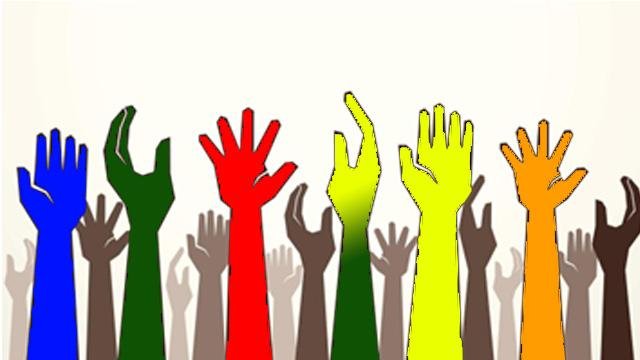
In a democratic society, political parties are entrusted with a broad responsibility that applies equally to both the governing party and the opposition. The opposition refers to the group that stands against the government both inside and outside Parliament. In a parliamentary system, the responsibility of controlling the ruling party and directing it toward the right path is assigned to the opposition.
In Sri Lanka, discussing the opposition's responsibility and accountability is particularly timely. The current government holds a two-thirds majority in Parliament at a moment when opposition accusations regarding government performance have intensified. This raises a crucial question: how far can the opposition fulfill its democratic watchdog role when facing such overwhelming power?
Critics argue that the opposition cannot play a significant role when a government with a two-thirds majority exists within a presidential system. The challenge is real, and the stakes are high for Sri Lankan democracy.
This Friday, November 21st, marks a significant moment. The first public rally of the "Maha Jana Handa" organization, a coalition of several major opposition parties united against the Jathika Jana Balawegaya (National People's Power) government, will be held in Nugegoda. The event has become a hot topic in the political sphere.
History offers context. In 2015, the "Mahinda Sulanga" movement emerged against the Good Governance coalition government. However, the different political backgrounds make predicting "Maha Jana Handa's" outcome difficult.
Although the Jathika Jana Balawegaya suffered a setback in last May's provincial council elections, it remains the largest force both inside and outside Parliament. The power it holds is extremely large, and if not properly managed, could lead to corruption and repression. Left-wing political parties built with great sacrifice in countries like Zimbabwe and Nicaragua later became corrupt and oppressive forces. This is why a strong, credible opposition is essential.
Balancing Rights and Responsibilities
If the government heads down the wrong path, the opposition has the right to oppose it. However, the opposition also has the responsibility to give the government time and opportunity to launch reform or development programs.
Here's where nuance matters. The opposition cannot portray the government's program of taking legal action against offenders, the "catching thieves" program, as being wrong. Questions arise about the fairness of holding demonstrations and gathering people onto streets over such instances. Yet the opposition also has the right to protest.
When governments take arbitrary actions for repression, crisis situations emerge that later turn into struggles. The balance is delicate, and both sides must navigate it carefully.
By winning public confidence, an opposition can question a government's transparency. But it can only do this by acting transparently and collectively itself. The opposition's ultimate objective should not be overthrowing governments, staging revolts, or creating social revolutions, but rather strengthening and making democracy healthier.
The opposition must also provide answers acceptable to the people regarding questions the government raises about the past. Credibility works both ways.
The opposition should raise its voice not only inside Parliament but also outside of it, contributing to the country's development by incorporating its proposals into beneficial government initiatives. In doing so, trust will be built among the people not only regarding the opposition's ideology but also regarding the opposition itself.
What Democracy Demands
As Sri Lanka navigates this period of concentrated political power, the opposition faces a defining test. Can it rise above political maneuvering to become a genuine force for democratic accountability? Can it offer credible alternatives while supporting good policies regardless of who proposes them?
These questions will shape not just the opposition's future, but the future of Sri Lankan democracy itself. The watchdog must remain alert, principled, and dedicated to strengthening the very system it seeks to protect. Because democracy isn't just about who wins elections, it’s about what happens between them.
Comments (0)
Sign in to leave a comment
No comments yet. Be the first to comment!